The Receipt
- 01The research is mostly on injections.
- 02Topical PDRN is unproven.
- 03Judge the product by its hydrators and price.
Education, not a diagnosis. If something changes quickly, hurts, bleeds, or worries you, see a dermatologist.
Skin Files · Trends
PDRN (polydeoxyribonucleotide) is showing up in serums and creams. What it is, what the research on injected PDRN shows, and why topical PDRN skincare is still unproven.
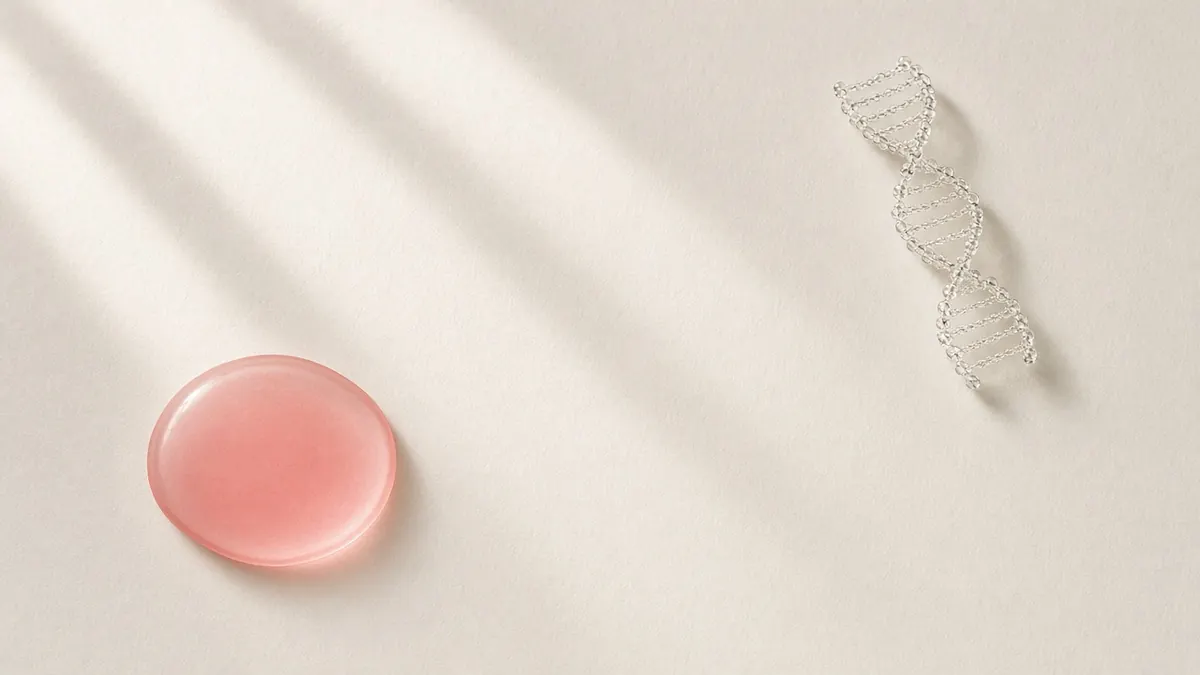
PDRN products are breaking out in searches, especially Korean creams and serums that pair it with hyaluronic acid. It is often called “salmon DNA”.
Polydeoxyribonucleotide is a mixture of DNA fragments, usually extracted from salmon or trout. Related products called polynucleotides (PN) use longer fragments.
Most research is on injected PDRN, used in medicine for wound healing and in aesthetic clinics as a “skin booster”. Studies, many of them in animals or lab cells, suggest it may support tissue repair.
Topical PDRN in a cream is different. It is a large molecule, and there is very little human evidence that it gets into the skin or changes it.
If you like the product, it is probably a pleasant moisturizer. Look at what else is in it: the hyaluronic acid, glycerin and other hydrators are doing most of the visible work.
PDRN is thought to act on adenosine A2A receptors, which are involved in tissue repair and inflammation. That mechanism is well described for injections, not for creams applied to intact skin.
The Receipt
Education, not a diagnosis. If something changes quickly, hurts, bleeds, or worries you, see a dermatologist.
Your receipt, next
Scan your skin for free and get a plain-English receipt with the evidence attached. No account needed.
Trend Receipts, by email
Occasional notes, no weekly blast. See our privacy page.