Skip to content

Skin Files · Retinoids

Retinal vs retinol: which is stronger and which should you use?

Retinal (retinaldehyde) vs retinol: how each converts to retinoic acid, which is stronger, how irritating they are, and how they compare with tretinoin.

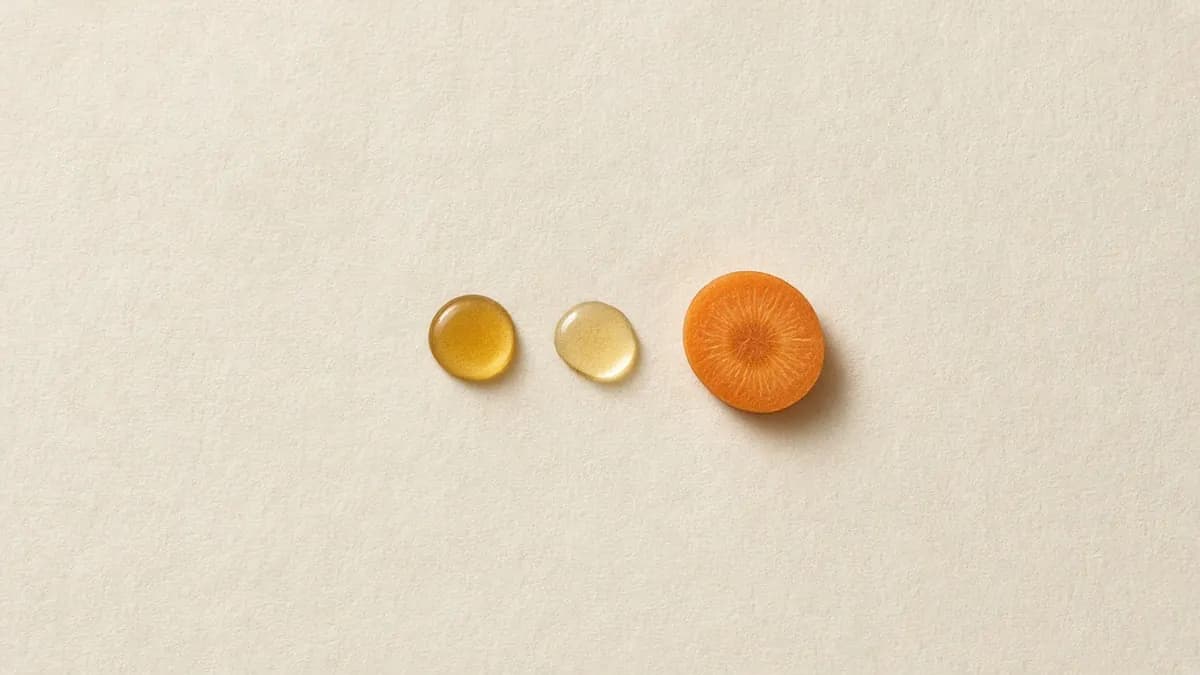
Two amber drops of different shades beside an orange disc, comparing retinoid strengths
Illustrative image

01 · The short version

Retinal shows up among the top searches next to retinol. The names are almost identical, and products using retinal often claim to be faster and stronger.

02 · The conversion chain

Skin uses retinoic acid. The cosmetic forms have to be converted to it first.

  • Retinol converts to retinal, then to retinoic acid: two steps.
  • Retinal (retinaldehyde) converts to retinoic acid: one step.
  • Tretinoin is retinoic acid itself and is prescription only in most countries.

03 · Which is stronger?

Because it is one step closer, retinal is generally considered more potent than retinol at the same concentration. Early human studies found 0.05% retinal produced changes similar to retinoic acid with better tolerance. Head-to-head trials with retinol are limited.

04 · How to choose

  • New to retinoids or sensitive: start with a low-strength retinol.
  • Used retinol comfortably for months: retinal is a reasonable next step.
  • Want the most evidence: ask a doctor about tretinoin.
  • For acne: adapalene has the clearest evidence of the over-the-counter options.

05 · Using either one

Start two or three nights a week, use a pea-sized amount, moisturize and wear sunscreen. Retinoids are generally avoided in pregnancy.

06 · The science

Retinoids bind retinoic acid receptors, influencing cell turnover and collagen. Each conversion step loses some potency, which is why retinol is gentler and slower than retinal, and retinal gentler than tretinoin.

07 · What might help

  • Tretinoin for photoaging.well-supported
  • Retinal for signs of skin aging.limited evidence
  • Retinol for fine lines.limited evidence

08 · Insufficient evidence

  • Exact strength conversions such as “retinal is 11 times stronger”.
  • Retinal being clearly better for acne than adapalene.

The Receipt

  1. 01Retinal is one step closer to retinoic acid than retinol.
  2. 02Stronger usually means more irritation.
  3. 03Pick based on your experience and tolerance, not hype.

Education, not a diagnosis. If something changes quickly, hurts, bleeds, or worries you, see a dermatologist.

Questions people ask

Is retinal stronger than retinol?
Generally yes. Retinal needs one conversion step to become retinoic acid, retinol needs two. Exact multiples quoted online aren’t well supported.
Can I switch from retinol to retinal?
Yes, if you’ve used retinol without irritation. Start retinal a few nights a week and build up.
Is retinal the same as tretinoin?
No. Tretinoin is retinoic acid, the active form. Retinal is converted into it in the skin.
Sources (7)
  1. Saurat JH, et al. Topical retinaldehyde on human skin: biologic effects and tolerance. J Invest Dermatol. 1994;103(6):770–774.
  2. Sorg O, et al. Metabolism of topical retinaldehyde. Dermatology. 1999;199 Suppl 1:13–17.
  3. Diridollou S, et al. Efficacy of topical 0.05% retinaldehyde in skin aging by ultrasound and rheological techniques. Dermatology. 1999;199 Suppl 1:37–41.
  4. Kafi R, et al. Improvement of naturally aged skin with vitamin A (retinol). Arch Dermatol. 2007.
  5. Mukherjee S, et al. Retinoids in the treatment of skin aging: an overview of clinical efficacy and safety. Clin Interv Aging. 2006.
  6. Weiss JS, et al. Topical tretinoin improves photoaged skin: a double-blind vehicle-controlled study. JAMA. 1988.
  7. DermNet. Topical retinoids (vitamin A creams).

Your receipt, next

See what your skin is actually asking for.

Scan your skin for free and get a plain-English receipt with the evidence attached. No account needed.

Trend Receipts, by email

Occasional notes, no weekly blast. See our privacy page.