Skip to content

Trend Receipt · Sunscreen with bemotrizinol

BEMT sunscreen: what bemotrizinol, the FDA's new sunscreen ingredient, really does

BEMT sunscreen explained: what bemotrizinol is, why the FDA added it as a new sunscreen ingredient in 2026, what it does well, and how to find it on a label.

Updated
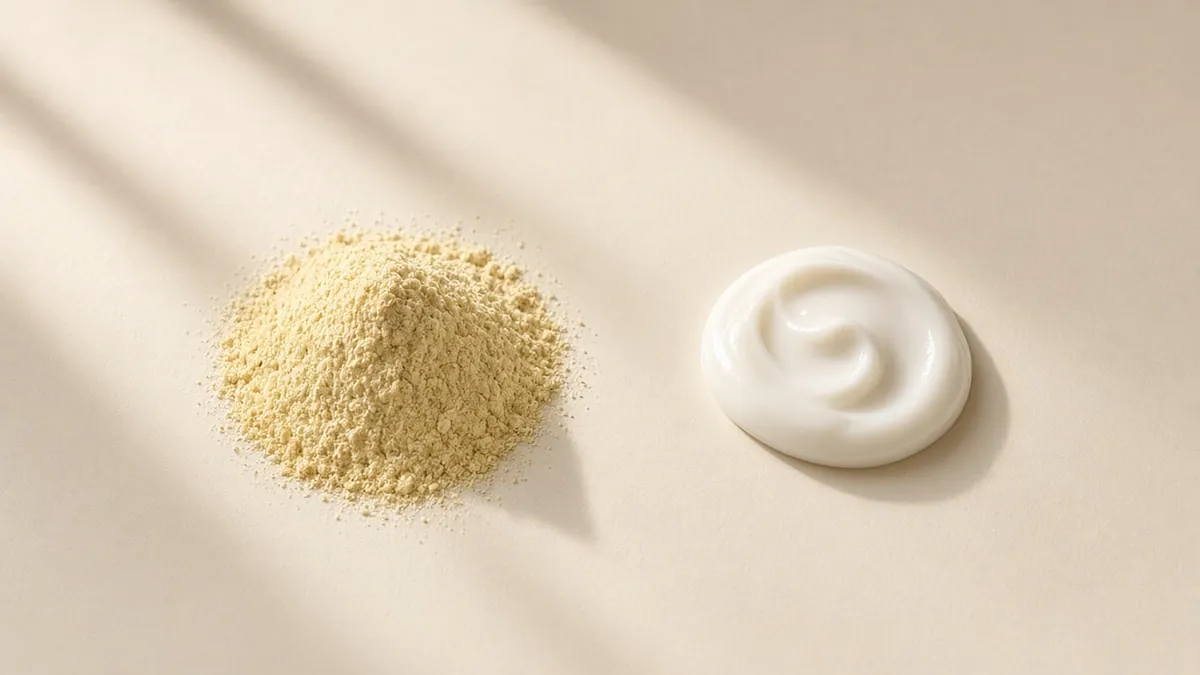
A small mound of pale yellow powder beside a smooth swirl of white sunscreen lotion on cream paper in soft sunlight
Illustrative image

01 · The trend

On June 9, 2026 the FDA added bemotrizinol to the list of ingredients allowed in US sunscreens, its first new sunscreen filter since the late 1990s, and the change took effect on August 9. Now searches for “bemt sunscreen”, “bemt sunscreen brands” and “new sunscreen ingredient fda bemotrizinol” are climbing on Google in the US and worldwide.

02 · The claim

“BEMT is the better European sunscreen filter: broad-spectrum, stable in sunlight and barely absorbed, so BEMT sunscreens finally bring that level of UVA protection to the US.”

03 · What the evidence says

  • Bemotrizinol is the US drug name for bis-ethylhexyloxyphenol methoxyphenyl triazine, the filter sold to brands as Tinosorb S or PARSOL Shield. It absorbs both UVB and UVA, and it has been used in sunscreens in Europe and many other countries for years.
  • Before adding it, the FDA reviewed two independent human efficacy studies plus safety data. It concluded bemotrizinol is safe and effective at up to 6% in sunscreens for adults and children 6 months and older.
  • Very little of it gets into the body. In a maximal-use trial, blood levels rarely passed the 0.5 ng/mL mark at which the FDA asks for more testing, and there was no build-up over repeated days. DSM, which makes the ingredient, funded that trial, but the FDA's own review reached the same conclusion. By comparison, several older US filters went past that mark in a 2020 FDA study.
  • It holds up in sunlight, and lab work on filter combinations shows it can help steady filters that break down in light, such as octinoxate. Stability came up again and again in public comments to the FDA.
  • What it doesn't prove: no study shows people get fewer burns, spots or wrinkles from a BEMT sunscreen than from another broad-spectrum SPF 30+ used the same way. How much you apply and how often you reapply still matter more than any single filter.

04 · The verdict

well-supported

The filter is the real deal: broad-spectrum, stable and barely absorbed, with an FDA review behind it. It makes good sunscreens easier to build, but it doesn't make any one bottle better than a broad-spectrum SPF 30+ you apply generously.

05 · Watch-outs

  • Choice is small for now. The FDA order gives DSM and the brands it licenses 18 months of exclusive US sales from the August 2026 start date, so only a short list of US products carry it.
  • Check the Drug Facts box, not the front of the bottle. A US sunscreen with it lists bemotrizinol under Active ingredients.
  • Sunscreens shipped from overseas sellers may contain the same filter but aren't necessarily tested or labeled to US drug standards, so their SPF and broad-spectrum claims are harder to trust.
  • Allergy is rare but possible: a handful of case reports describe allergic contact dermatitis to it. If sunscreens tend to make you itch, patch test first.

The Receipt

  1. 01BEMT is a well-studied broad-spectrum filter: new to the US, old news in Europe.
  2. 02Low absorption and stability in sunlight are its real selling points.
  3. 03Look for bemotrizinol under Active ingredients, then apply enough and reapply.

Check it against your skin

Wondering if sunscreen with bemotrizinol fits your routine? Ask Receipt, or do a guided scan so it can see what you're working with.

FAQ · Quick answers

What is BEMT sunscreen?
A sunscreen that uses bemotrizinol (BEMT), a filter that absorbs both UVA and UVB. The FDA added it to the US list of allowed sunscreen ingredients in June 2026, after years of use in Europe and many other countries.
Is BEMT sunscreen better than other sunscreens?
The filter has real strengths: broad coverage, stability in sunlight and very low absorption. But protection depends on the whole formula and on how much you use. A broad-spectrum SPF 30+ you wear generously every day beats a BEMT sunscreen you skimp on.
Is bemotrizinol safe?
The FDA concluded it is safe and effective at up to 6% for adults and children 6 months and older, based on human safety and absorption studies. Skin allergy to it has been reported but is rare. For babies under 6 months, ask a doctor, as with any sunscreen.
Which brands make BEMT sunscreen, and where can I buy it?
The list is short for now because DSM, the company that asked the FDA for the change, and its licensed partners have 18 months of exclusive US sales. Lineups are changing quickly, so the reliable check is the Drug Facts box: look for bemotrizinol under Active ingredients.
Is bemotrizinol reef safe?
“Reef safe” isn't a regulated term. A 2026 lab study found BEMT didn't harm a freshwater alga that some other filters did, but a sediment study found marine microbes didn't break it down after 100 days. There's no good coral research on it yet. The FDA concluded that adding it would not significantly affect the environment.
Is BEMT a mineral or chemical sunscreen?
It's an organic filter, the kind usually called chemical. Unlike several older chemical filters, very little of it reaches the bloodstream, which is a big part of why it gets so much attention.
Sources (10)
  1. U.S. FDA. FDA expands sunscreen options for the first time in 20 years (news release, June 9, 2026).
  2. U.S. FDA. Final Administrative Order OTC000039: amending OTC Monograph M020 to add bemotrizinol as a sunscreen active ingredient (issued June 10, 2026).
  3. U.S. FDA. Questions and answers: FDA’s regulatory actions on over-the-counter sunscreen.
  4. D'Ruiz CD, et al. Preliminary clinical pharmacokinetic evaluation of bemotrizinol, a new sunscreen active ingredient being considered for inclusion under FDA's over-the-counter (OTC) sunscreen monograph. Regul Toxicol Pharmacol. 2023.
  5. Matta MK, et al. Effect of sunscreen application on plasma concentration of sunscreen active ingredients: a randomized clinical trial. JAMA. 2020.
  6. Herzog B, et al. Insights into the stabilization of photolabile UV-absorbers in sunscreens. Photochem Photobiol Sci. 2020.
  7. Badaoui A. Allergic contact dermatitis to bis-ethylhexyloxyphenol methoxyphenyl triazine (Tinosorb S) in a sunscreen: an emerging allergen? Contact Dermatitis. 2024.
  8. Yan Y, et al. Chronic toxicity of triazine-based and non-triazine ultraviolet filters toward Chlorella vulgaris: low ecological risk of triazine-based compounds. Bioresour Technol. 2026.
  9. Fagervold SK, et al. Marine sediments microbes degrade a limited repertoire of organic UV filters. Environ Sci Pollut Res Int. 2025.
  10. American Academy of Dermatology. How to select a sunscreen.

Your receipt, next

See what your skin is actually asking for.

Scan your skin for free and get a plain-English receipt with the evidence attached. No account needed.

Trend Receipts, by email

Occasional notes, no weekly blast. See our privacy page.