Skip to content

Skin Files · Brand receipts

Japanese skincare brands: Curél, Hada Labo, SK-II and Sekkisei, decoded

An honest receipt on the Japanese skincare brands people are searching for: Curél's ceramide creams, Hada Labo's hyaluronic lotion, SK-II's Pitera essence, Sekkisei, and what the evidence says.

By , skincarereceipt content team · Published

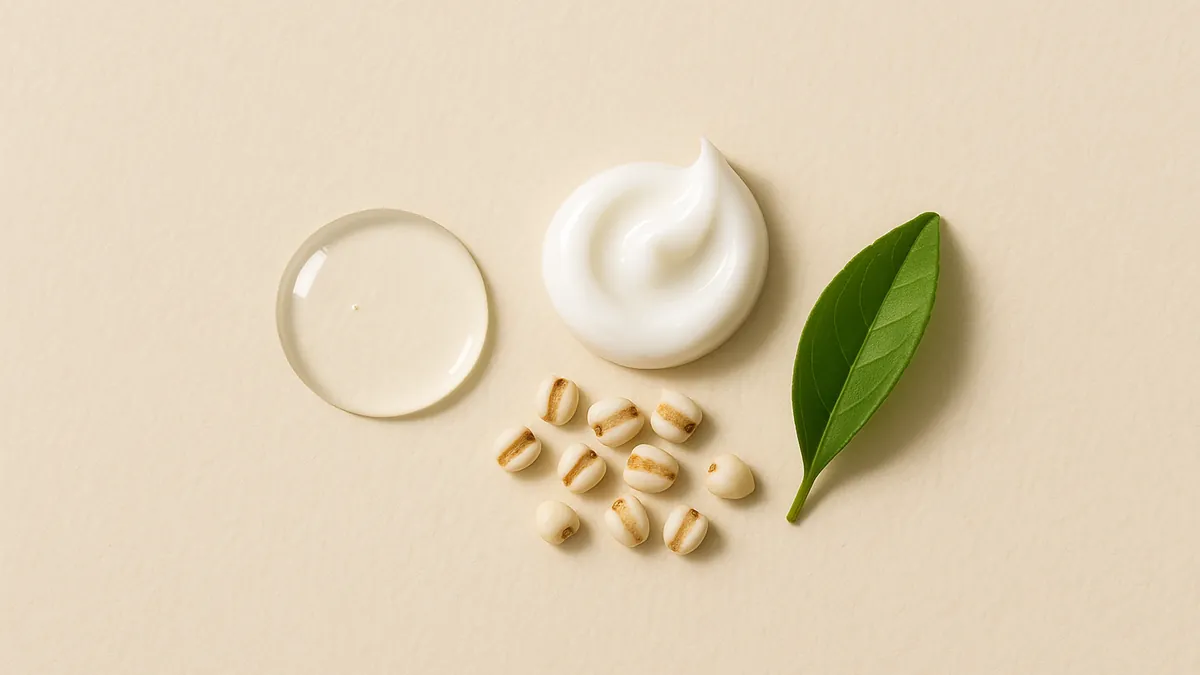
A clear pool of watery lotion, a swirl of white cream, a few pearl barley grains (Job's tears) and a green tea leaf on cream paper
Illustrative image

01 · The short version

Searches for Japanese skincare brands jumped more than tenfold in the US this week, and Curél (often typed as "Cerel") was a breakout search worldwide. Kao has been taking Curél into new markets in Europe this year, and J-beauty keeps getting compared with Korean skincare.

Japanese brands tend to sell fewer, gentler steps: a watery lotion, an emulsion or cream, and a lot of sunscreen. Here's what four of the most searched names actually put in the bottle, and how much of it is backed by research.

02 · Curél (Kao): ceramide care for dry, sensitive skin

Curél is Kao's brand for dry, sensitive skin. Kao says its researchers singled out ceramides as key to skin moisture in 1985, and the brand launched in 1999. Kao calls it Japan's No. 1 skincare brand for sensitive skin, based on sales data.

The face creams don't list classic ceramides near the top. They use cetyl-PG hydroxyethyl palmitamide, a lab-made "pseudo-ceramide" that Kao designed to behave like the skin's own, plus glycerin and eucalyptus leaf extract. The face line is fragrance-free.

One thing that trips up US shoppers: in the US, the Curél name is best known for body lotions. The Japanese face range (Intensive Moisture Facial Cream, Moisture Face Milk, cleansers) is a separate line that Kao USA sells online, including on Amazon.

03 · Hada Labo (Rohto): the hyaluronic acid lotion

Hada Labo's Gokujyun lotions are the classic Japanese "lotion": a watery, slightly thick toner you pat on after cleansing. The Premium version lists eight forms of hyaluronic acid. It's fragrance-free, colorant-free, oil-free, alcohol-free and paraben-free, and it's inexpensive.

Hyaluronic acid is a humectant that holds water in the outer layer of skin, so a lotion like this does make dry or dehydrated skin feel plumper and more comfortable. We haven't seen evidence that eight types beat one or two; the extra forms are more about texture and marketing. Follow it with a moisturizer so the water doesn't just evaporate.

04 · SK-II (P&G): what Pitera is

SK-II's Facial Treatment Essence is more than 90% Pitera, the brand's name for galactomyces ferment filtrate, a liquid made by fermenting yeast. The full list is seven ingredients. The brand story is that scientists noticed sake brewers had unusually soft hands.

The research is mostly SK-II's own. The biggest study gave 86 women in Japan three SK-II products for 12 months and measured fewer wrinkles and spots and better hydration. It was run by P&G staff and had no comparison group using a plain moisturizer, so it can't tell you whether Pitera did more than any decent routine would. Other studies are in skin cells in a dish.

If you like the feel, it's a pleasant hydrating essence. At close to $100 a bottle, it isn't a must.

05 · Sekkisei (Kosé): Job's tears and the brightening promise

Sekkisei is Kosé's brightening line, built around Job's tears (coix seed) extract with angelica root, moutan bark and a vitamin C derivative (ascorbyl glucoside). The original Emulsion is a light, milky moisturizer.

The evidence for Job's tears on skin is thin: the brightening data we found comes from pigment cells in a lab, not from people. The Emulsion also lists alcohol as its second ingredient and contains fragrance, which matters if your skin is reactive. If dark spots are your goal, ingredients with human trials, such as niacinamide (our Tone Balance Niacinamide Serum is one option) or azelaic acid, plus daily sunscreen, are a better bet.

06 · A note on Japanese sunscreens

Japanese sunscreens like Anessa (Shiseido) and Bioré UV (Kao) are cult favorites for their light textures. Versions made for Japan can use UV filters that aren't on the FDA's list for US sunscreens. The FDA only added bemotrizinol, its first new filter in over 20 years, in 2026. If you're in the US and want an FDA-reviewed product, check for a Drug Facts box.

07 · The science

Ceramides are part of the fatty "mortar" between skin cells that keeps water in. In dry and eczema-prone skin, ceramide levels tend to be lower, which is why barrier creams try to top them up or help skin make more.

In a 4-week randomized trial by Kao researchers, people with dry, sensitive skin who used a pseudo-ceramide spray saw better skin hydration, less water loss and less scaling, while the group using a spray without it saw no change. A review of the pseudo-ceramide plus eucalyptus moisturizer found improved barrier function in atopic dermatitis skin. Promising, but most of this work comes from the company that makes it.

08 · What might help

  • Ceramide or pseudo-ceramide moisturizers like Curél for dry, sensitive skin.limited evidence
  • Humectant lotions with hyaluronic acid and glycerin for dehydrated skin.well-supported
  • Fragrance-free formulas for people prone to irritation or contact allergy.well-supported
  • Galactomyces ferment filtrate (Pitera) for wrinkles and spots.limited evidence

09 · Insufficient evidence

  • Job's tears (coix seed) extract as a skin brightener in people.
  • Eight types of hyaluronic acid working better than one or two.
  • A high price meaning better results.

The Receipt

  1. 01Curél is the most evidence-backed pick here for dry, sensitive skin, though the research is mostly Kao's.
  2. 02Hada Labo is a cheap, fragrance-free hydrator. Seal it in with a moisturizer.
  3. 03SK-II and Sekkisei are pleasant to use, but their signature ingredients haven't been proven in independent trials.

Education, not a diagnosis. If something changes quickly, hurts, bleeds, or worries you, see a dermatologist.

Questions people ask

What are the best Japanese skincare brands?
It depends on what you need. For dry, sensitive skin, Curél's fragrance-free ceramide creams have the most research behind them. Hada Labo makes simple, affordable hydrating lotions. SK-II and Sekkisei are popular but rely on signature ingredients with limited independent evidence.
Is it Cerel or Curél skincare?
The brand is Curél, made by Kao in Japan. "Cerel" is a common misspelling. In the US, Curél is best known for body lotions, and the Japanese face range is sold online.
Are Japanese skincare brands good for sensitive skin?
Many are. Curél and Hada Labo's Gokujyun lotions are fragrance-free. Some popular lines, including Sekkisei's Emulsion, contain alcohol and fragrance, so read the ingredient list and patch test if your skin reacts easily.
What's the difference between Japanese and Korean skincare brands?
There's a lot of overlap. Japanese brands tend to keep routines short and focus on hydrating lotions, emulsions and sunscreen. Korean brands lean into more steps and newer trend ingredients. Neither is better; the basics are the same.
Sources (13)
  1. Kao Corporation. Kao steps up EMEA skincare growth with Curél launch in the Nordics (news release, Aug 25, 2026).
  2. Curél (Kao USA). Intensive Moisture Facial Cream: ingredients and FAQs.
  3. Akahane T, et al. Efficacy of pseudo-ceramide absorption into the stratum corneum and effects on transepidermal water loss and the ceramide profile: a randomized controlled trial. J Cosmet Dermatol. 2025.
  4. Takagi Y. Efficacy of topical application of a skin moisturizer containing pseudo-ceramide and a eucalyptus leaf extract on atopic dermatitis: a review. J Clin Med. 2024.
  5. Elias PM. Stratum corneum defensive functions: an integrated view. J Invest Dermatol. 2005.
  6. Rohto Pharmaceutical. Hada Labo Gokujun Premium Hyaluronic Acid Lotion (product information).
  7. Papakonstantinou E, Roth M, Karakiulakis G. Hyaluronic acid: a key molecule in skin aging. Dermatoendocrinol. 2012.
  8. SK-II. PITERA Facial Treatment Essence: product page and ingredients.
  9. Miyamoto K, et al. Significant reversal of facial wrinkle, pigmented spot and roughness by daily application of galactomyces ferment filtrate-containing skin products for 12 months: an 11-year longitudinal skin aging rejuvenation study. J Clin Med. 2023.
  10. SEKKISEI. Emulsion: key ingredients and full ingredient list.
  11. Amen Y, et al. Melanogenesis inhibitors from Coix lacryma-jobi seeds in B16-F10 melanoma cells. Nat Prod Res. 2017.
  12. Goossens AE. Fragrance contact allergy. J Eur Acad Dermatol Venereol. 2018;32(1):9.
  13. U.S. FDA. FDA expands sunscreen options for the first time in 20 years (news release, June 9, 2026).

Your receipt, next

See what your skin is actually asking for.

Scan your skin for free and get a plain-English receipt with the evidence attached. No account needed.

Trend Receipts, by email

Occasional notes, no weekly blast. See our privacy page.