Skip to content

Trend Receipt · Oxygen face masks

Oxygen face mask skincare: do bubbling masks really oxygenate your skin?

Oxygen face mask skincare is trending. What bubbling oxygen masks actually contain, what research on skin and oxygen shows, and what they can and can't do.

By , skincarereceipt content team · Updated
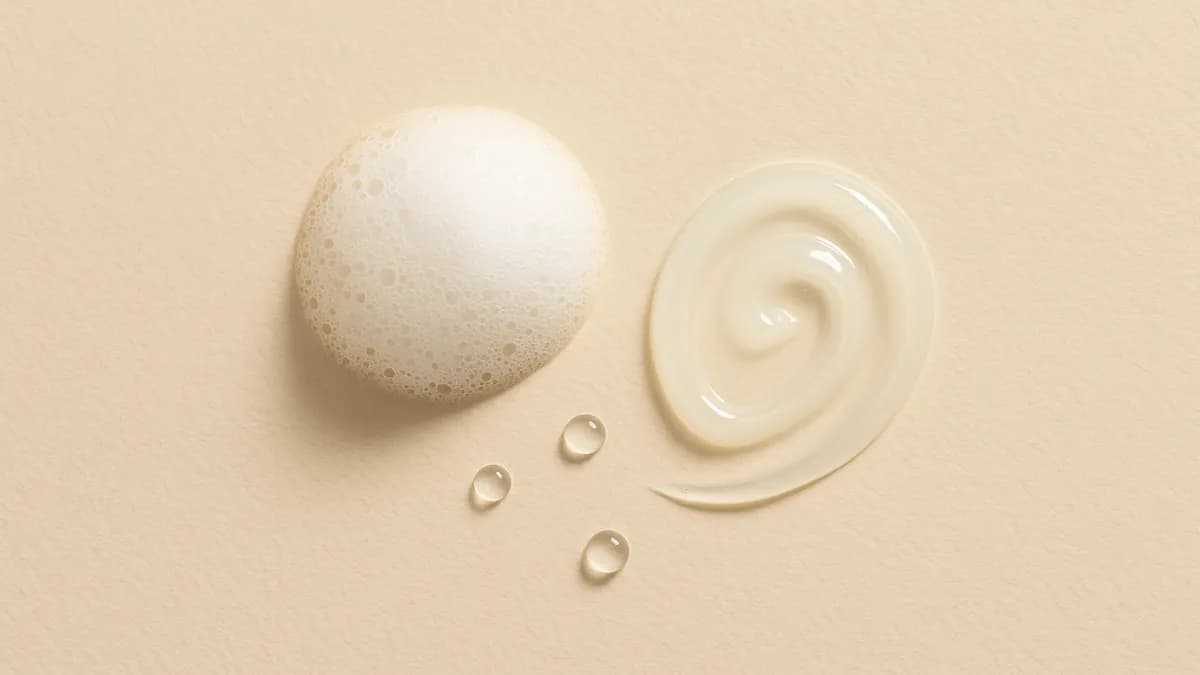
A dome of fine white foam beside a swirl of pale translucent gel and three small clear droplets on cream paper
Illustrative image

01 · The trend

Google Trends showed “oxygen face mask skincare” up 750% among US face mask searches for the 7 days to October 20, 2026, and “oxygen mask skincare” up 450% among US skincare searches. Neither phrase appeared in the week before. Two things are feeding it. Dr. Brandt relaunched its bubbling Oxygen Facial Mask, sold as “Oxygen in a Bottle,” this summer. And bubble-texture skincare is a hit in Korea: CJ Olive Young reported searches for “bubble serum” up more than 60-fold on the year, and manufacturers say TikTok is spreading the interest to the US and Europe.

02 · The claim

“Bubbling “oxygen” masks deliver oxygen into your skin, waking up dull, tired skin and giving it a glow, like a spa oxygen facial at home.”

03 · What the evidence says

  • Skin really does take in oxygen from the air. In a 2002 study of 20 volunteers, German researchers measured oxygen moving into forearm skin and estimated that the top 0.25 to 0.40 mm of skin is supplied almost entirely by oxygen from the air, with blood playing a minor role. That's the grain of truth behind the trend. It also means healthy skin already sits in a steady supply of oxygen all day. The same study found the uptake didn't change with age, which cuts against the marketing line that skin uses oxygen less well as we get older.
  • Most bubbling masks don't contain an oxygen source. The fizz comes from foaming ingredients. Dr. Brandt's relaunched mask is a good example: after water, the list starts with glycerin, disiloxane, hydroxyethyl urea and propanediol, then three mild foaming cleansers (cocamidopropyl betaine and two cocoyl glutamates). Nothing on it releases or carries oxygen.
  • The brand's “OxyGLOW” active is glossy privet (Ligustrum lucidum) fruit extract, which it says helps skin use oxygen more efficiently. We found lab work on anti-inflammatory compounds from the fruit, tested in cells, but no human study showing it changes how skin uses oxygen. Dr. Brandt also cites a four-week trial of the mask's “core ingredients” with 17.4% denser skin and 50% less water loss. We couldn't find it published, and it tested ingredients, not the mask itself.
  • Real oxygen carriers do exist, in a different kind of product. Perfluorocarbons such as perfluorodecalin dissolve a lot of oxygen: a 2020 review in the Journal of Drugs in Dermatology notes that preparations with 2% of these compounds can hold up to seven times more oxygen than water at body temperature, and one such emulsion is sold for recovery after laser and other skin procedures. The best cosmetic data is old. A 1996 study by a cosmetics manufacturer reported that creams loaded with oxygen in perfluorodecalin raised oxygen levels in the skin and reduced fine lines as the dose went up. It was described as preliminary, the abstract doesn't say how many people took part, and independent trials haven't followed.
  • Oxygen clearly helps in one place: wounds. A 2024 meta-analysis of seven randomized trials (692 people) found that adding topical oxygen therapy to standard care raised the share of chronic wounds that healed from about 26% to 43%. That's medical oxygen delivered by a device for weeks to damaged, oxygen-starved tissue, not foam on healthy facial skin for five minutes.
  • Hyperbaric oxygen, where you breathe pure oxygen in a pressurized chamber, gets quoted for anti-aging too. A small 2021 trial took skin biopsies from 13 older men before and after three months of daily sessions and found denser collagen; several authors declared they work for a commercial company, AVIV Scientific. A 2025 systematic review of hyperbaric oxygen in aesthetics called the evidence limited and not enough to justify the cost. Either way, it says nothing about a mask.
  • What a bubble mask can do comes from its base. Glycerin is a well-studied humectant that draws water into the top layer of skin, so a rinse-off mask built on it can leave skin softer and a little dewier for a few hours. The cool fizz and the rinse add to the fresh feeling. That's a pleasant mask, not an oxygen treatment.

04 · The verdict

insufficient evidence

Mostly hype. The top layers of healthy skin already get their oxygen straight from the air, and most bubbling “oxygen” masks have no oxygen source in them: the bubbles come from foaming agents. Expect a nice hydrating rinse-off mask and nothing more.

05 · Watch-outs

  • Don't pay extra for the word “oxygen.” Read the ingredient list: if it leads with water, glycerin and foaming cleansers, you're buying a hydrating wash-off mask.
  • Fragrance is common in these masks. Dr. Brandt's contains lavender oil plus linalool and linalyl acetate, fragrance ingredients that can cause allergic rashes in some people. Patch test first if your skin reacts easily.
  • The foaming agents are cleansers. On top of a face wash and exfoliating acids, daily use can leave dry or sensitive skin tight. Once or twice a week is plenty.
  • Oxygen-carrier products often use perfluorodecalin, which belongs to the PFAS family of fluorinated chemicals. A 2024 survey of 765 cosmetics found it was one of the two most common PFAS ingredients, and its effects through the skin are poorly studied. If you'd rather avoid PFAS, look for “perfluoro” on the label.
  • A spa “oxygen facial” is a different thing again: a machine sprays pressurized oxygen and a serum onto the face. We couldn't find controlled trials of it either, so treat it as pampering rather than treatment.
  • If dullness is the real complaint, the stronger receipts are daily sunscreen, a gentle exfoliant and a retinoid at night.

The Receipt

  1. 01Your skin's top layer already gets its oxygen from the air.
  2. 02Most oxygen masks bubble because of foaming agents, not oxygen.
  3. 03Enjoy one as a hydrating rinse-off mask. Don't pay a premium for the oxygen claim.

Check it against your skin

Wondering if oxygen face masks fits your routine? Ask Receipt, or do a guided scan so it can see what you're working with.

FAQ · Quick answers

What is an oxygen face mask in skincare?
In oxygen face mask skincare, the term usually means a bubbling mask that foams up on damp skin and is rinsed off after a few minutes. Some older products used perfluorocarbons to carry dissolved oxygen, but most of today's bubble masks list no oxygen source at all. The foam comes from cleansing agents.
Do oxygen face masks actually work?
They can leave skin soft and fresh, mostly thanks to humectants like glycerin and the rinse. There's no good evidence that they push oxygen into skin or change how skin uses it. The top layers of healthy skin already get their oxygen from the air.
Are bubbling oxygen masks safe?
For most people, used once or twice a week, yes. The usual problems are tightness from the foaming agents and reactions to fragrance oils such as lavender. Rinse it off and stop if your skin stings, itches or turns red.
Is an oxygen facial worth it?
As a relaxing treatment, maybe. As a skin treatment, the evidence is thin. We couldn't find controlled trials of spa oxygen facials, and the strong oxygen research is in chronic wounds, not healthy facial skin.
Does skin need more oxygen as it ages?
Not that the research shows. A 2002 study that measured how much oxygen skin takes in from the air found no difference between age groups.
What helps dull skin more than an oxygen mask?
Daily sunscreen, a gentle AHA exfoliant a few times a week, a retinoid at night and a moisturizer with glycerin or ceramides. Each of these has far more evidence behind it than any oxygen claim.
Sources (13)
  1. Stücker M, et al. The cutaneous uptake of atmospheric oxygen contributes significantly to the oxygen supply of human dermis and epidermis. J Physiol. 2002.
  2. Dr. Brandt Skincare. Oxygen Facial Mask: product page, directions and full ingredient list.
  3. Page Six. Skip pricey spa treatments: this bubbling mask is an oxygen facial in a bottle (shopping report on Dr. Brandt's relaunch and its trial claims, Aug 20, 2026).
  4. News1 via Financial News (Korea). K-beauty bubble-texture skincare competition heats up; Olive Young 'bubble serum' searches up 6,068% (in Korean, Oct 9, 2026).
  5. Yeon SW, et al. Therapeutic potentials of secoiridoids from the fruits of Ligustrum lucidum Aiton against inflammation-related skin diseases. Pharmaceuticals (Basel). 2022.
  6. Gold MH, Nestor MS. A supersaturated oxygen emulsion for wound care and skin rejuvenation. J Drugs Dermatol. 2020.
  7. Stanzl K, et al. The effectiveness of molecular oxygen in cosmetic formulations. Int J Cosmet Sci. 1996.
  8. Putri IL, et al. The efficacy of topical oxygen therapy for wound healing: a meta-analysis of randomized controlled trials and observational studies. Int Wound J. 2024.
  9. Hachmo Y, et al. The effect of hyperbaric oxygen therapy on the pathophysiology of skin aging: a prospective clinical trial. Aging (Albany NY). 2021.
  10. Fisher SM, et al. Hyperbaric oxygen therapy in aesthetic medicine and anti-aging: a systematic review. Aesthetic Plast Surg. 2025.
  11. Fluhr JW, Darlenski R, Surber C. Glycerol and the skin: holistic approach to its origin and functions. Br J Dermatol. 2008.
  12. Goossens AE. Fragrance contact allergy. J Eur Acad Dermatol Venereol. 2018;32(1):9.
  13. Céline C, et al. Per- and polyfluoroalkyls used as cosmetic ingredients: qualitative study of 765 cosmetic products. Food Chem Toxicol. 2024.

Your receipt, next

See what your skin is actually asking for.

Scan your skin for free and get a plain-English receipt with the evidence attached. No account needed.

Trend Receipts, by email

Occasional notes, no weekly blast. See our privacy page.