Skip to content

Skin Files · Body

The best ingredients for cellulite creams, ranked by evidence

The best ingredients for cellulite creams, ranked by the evidence: caffeine leads with double-blind trial support, retinol follows, and hydrators, vitamin C, shea, avocado and red algae extracts back them up.

By , skincarereceipt content team · Published

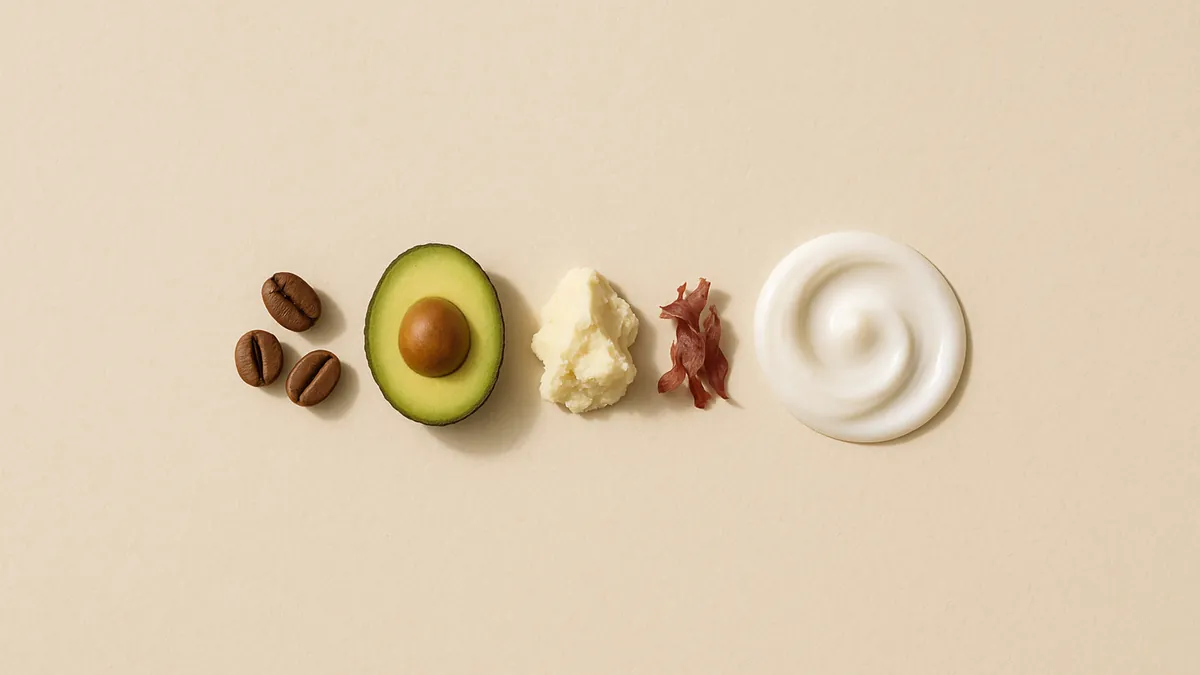
A row of coffee beans, half an avocado, a piece of shea butter and dried red seaweed beside a swirl of white cream
Illustrative image

01 · The short version

Short answer: caffeine is the best ingredient for cellulite creams, with randomised, double-blind trials showing better cellulite scores than placebo. Retinol is next. Combination creams that pair caffeine with other actives have beaten placebo in several controlled trials. Hyaluronic acid, vitamin C, shea butter and avocado oil make skin look smoother and firmer on top.

Here's how the common ingredients rank, and what the studies behind each actually measured.

02 · Tier 1: the actives with trial results

  • Caffeine. In a 2026 double-blind trial, a 2% caffeine cream lowered average cellulite scores from 3.96 to 2.50 over 12 weeks, versus 3.88 to 2.83 for placebo. A 7% caffeine study saw thigh circumference go down in more than 80% of cases after a month. Caffeine reaches the deeper skin layers and switches on fat release in skin explants.
  • Retinol. In a placebo-controlled study, 15 women used retinol on one thigh for six months. Skin elasticity rose 10.7% and viscosity fell 15.8%. The AAD notes 0.3% retinol can help after six months or more.
  • Combinations. A caffeine, retinol and ruscogenine cream beat placebo on the orange-peel look in a double-blind trial of 46 women. A caffeine, carnitine, forskolin and retinol cream beat placebo in a 12-week trial of 78 women, with orange peel and stubborn cellulite improving from week 4. A multi-active gel improved cellulite in 81% of users versus 32% on placebo after 3 months.

03 · Tier 2: smoother, firmer-looking skin

  • Hyaluronic acid (sodium hyaluronate). In a 60-day trial, 0.1% hyaluronic acid creams significantly improved skin hydration and elasticity compared with a control cream.
  • Vitamin C (sodium ascorbyl phosphate). Vitamin C drives collagen production. In a 6-month double-blind study on arms and neck, a 5% vitamin C cream improved skin texture and elastic tissue more than its base cream, and topical vitamin C raised collagen gene activity in human skin. Sodium ascorbyl phosphate is a stable form that delivers vitamin C into skin. These studies were on photoaged skin, not cellulite.
  • Shea butter and avocado oil. Reviews of plant oils on skin credit both with barrier repair and anti-inflammatory effects. Avocado oil raised soluble collagen in skin in an animal study. On the body, they soften rough skin and give a cream the slip to massage in.
  • Panthenol and vitamin E. Panthenol is well documented for moisturizing and strengthening the skin barrier. Vitamin E is an antioxidant that stabilizes the barrier and protects the oils in a formula.

04 · Tier 3: promising, less tested

  • Red algae extracts. In one study, a mix including the red alga Furcellaria lumbricalis boosted fat release in human fat cells in the lab, and the full cream improved dermatologist cellulite grading versus vehicle after 8 and 12 weeks. Red algae extracts aren't all the same, so this supports the idea more than any single extract.
  • Warming ingredients like capsaicin or niacin esters. They make skin red and tingly. Redness on its own isn't proof of anything.
  • Aminophylline. A drug-type ingredient the AAD warns can cause a racing heart and is risky for people with asthma.

05 · What's in our skincarereceipt Body Butter

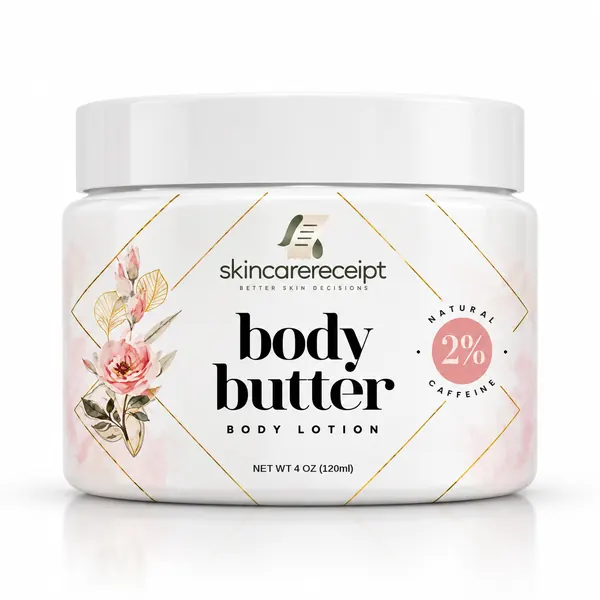
skincarereceipt Body Butter is built around Tier 1 and Tier 2: 2% caffeine, vitamin C (sodium ascorbyl phosphate), sodium hyaluronate, avocado oil, shea butter, panthenol and vitamin E, plus a hydrolyzed red algae extract. It's $24.95 for 4 oz. With regular application on the thighs, buttocks and stomach, it visibly reduces the appearance of cellulite. It's a cosmetic for the look of the skin, not a fat-loss product, and it does contain fragrance, so patch test if your skin is reactive.

06 · How to judge any cellulite cream

  • Look for caffeine or retinol in the first half of the ingredient list.
  • Check for aminophylline and skip it if you have asthma.
  • Ignore words like slimming, detox and fat-burning.
  • Give it 8 to 12 weeks (six months for retinol) and take photos in the same light.

07 · The science

A meta-analysis of controlled trials of anti-cellulite creams found an average extra 0.46 cm off thigh circumference compared with control creams. Trials varied a lot in formula and method, and the strongest single results come from double-blind caffeine and caffeine-combination trials. Every cream works on the look of the skin and needs steady use.

08 · What might help

  • Caffeine creams applied twice daily, which beat placebo in double-blind trials.limited evidence
  • Retinol body products used for six months or more.limited evidence
  • Humectants and emollients for smoother-looking, softer skin.well-supported

09 · Insufficient evidence

  • Single red algae or seaweed extracts tested on their own in cellulite.
  • Warming or tingling creams as proof of fat loss.
  • Topical vitamin C tested specifically on cellulite.

The Receipt

  1. 01Caffeine leads, with double-blind trials behind it. Retinol and caffeine combinations follow.
  2. 02Moisturizers make the surface look smoother. That's a real, if temporary, benefit.
  3. 03No ingredient removes cellulite. Pick a cream you'll actually use twice a day.

Education, not a diagnosis. If something changes quickly, hurts, bleeds, or worries you, see a dermatologist.

Questions people ask

What is the best ingredient for cellulite?
Caffeine and retinol have the most human evidence. Caffeine works faster but fades when you stop. Retinol needs about six months. Neither removes cellulite.
Do cellulite creams actually work?
Yes, for the look of cellulite. Double-blind trials of caffeine and caffeine-combination creams beat placebo on cellulite scores, and a meta-analysis found about half a centimetre more off thigh measurements, with results lasting while you keep using them.
Is hyaluronic acid good for cellulite?
It hydrates the surface so skin looks smoother for a while. It doesn't change the bands or fat that cause cellulite.
Sources (21)
  1. Ponto T, et al. Clinical effectiveness of a novel caffeine nano-cream for cellulite reduction: a randomised double-blind trial. Pharmaceutics. 2026.
  2. Lupi O, et al. Evaluation of the effects of caffeine in the microcirculation and edema on thighs and buttocks using orthogonal polarization spectral imaging and clinical parameters. J Cosmet Dermatol. 2007.
  3. Byun SY, et al. Efficacy of slimming cream containing 3.5% water-soluble caffeine and xanthenes for the treatment of cellulite: clinical study and literature review. Ann Dermatol. 2015.
  4. Bertin C, et al. A double-blind evaluation of the activity of an anti-cellulite product containing retinol, caffeine, and ruscogenine. J Cosmet Sci. 2001.
  5. Roure R, et al. Evaluation of the efficacy of a topical cosmetic slimming product combining tetrahydroxypropyl ethylenediamine, caffeine, carnitine, forskolin and retinol. Int J Cosmet Sci. 2011.
  6. Dupont E, et al. An integral topical gel for cellulite reduction: results from a double-blind, randomized, placebo-controlled evaluation of efficacy. Clin Cosmet Investig Dermatol. 2014.
  7. Al-Bader T, et al. Effect of cosmetic ingredients as anticellulite agents: synergistic action of actives with in vitro and in vivo efficacy. J Cosmet Dermatol. 2012.
  8. Turati F, et al. Efficacy of cosmetic products in cellulite reduction: systematic review and meta-analysis. J Eur Acad Dermatol Venereol. 2014.
  9. Piérard-Franchimont C, et al. A randomized, placebo-controlled trial of topical retinol in the treatment of cellulite. Am J Clin Dermatol. 2000.
  10. Pavicic T, et al. Efficacy of cream-based novel formulations of hyaluronic acid of different molecular weights in anti-wrinkle treatment. J Drugs Dermatol. 2011.
  11. Humbert PG, et al. Topical ascorbic acid on photoaged skin: double-blind study vs. placebo. Exp Dermatol. 2003.
  12. Nusgens BV, et al. Topically applied vitamin C enhances the mRNA level of collagens I and III in human dermis. J Invest Dermatol. 2001.
  13. Klock J, et al. Sodium ascorbyl phosphate shows in vitro and in vivo efficacy in the prevention and treatment of acne vulgaris. Int J Cosmet Sci. 2005.
  14. Lin TK, Zhong L, Santiago JL. Anti-inflammatory and skin barrier repair effects of topical application of some plant oils (incl. avocado oil and shea butter). Int J Mol Sci. 2017.
  15. Proksch E, et al. Topical use of dexpanthenol: a 70th anniversary article. J Dermatolog Treat. 2017.
  16. Thiele JJ, et al. Vitamin E: critical review of its current use in cosmetic and clinical dermatology. Dermatol Surg. 2005.
  17. Hexsel D, et al. Botanical extracts used in the treatment of cellulite. Dermatol Surg. 2005.
  18. American Academy of Dermatology. Cellulite treatments: what really works?
  19. Luebberding S, Krueger N, Sadick NS. Cellulite: an evidence-based review. Am J Clin Dermatol. 2015.
  20. Papakonstantinou E, Roth M, Karakiulakis G. Hyaluronic acid: a key molecule in skin aging. Dermatoendocrinol. 2012.
  21. Pullar JM, Carr AC, Vissers MCM. The roles of vitamin C in skin health. Nutrients. 2017.

Your receipt, next

See what your skin is actually asking for.

Scan your skin for free and get a plain-English receipt with the evidence attached. No account needed.

Trend Receipts, by email

Occasional notes, no weekly blast. See our privacy page.