Skip to content

Skin Files · Body

Why do I have cellulite? What causes it (even if you're thin)

Why do I have cellulite? It comes down to how the bands under your skin are built, plus hormones, genes and age. Weight plays a part, but thin and fit people get it too.

By , skincarereceipt content team · Published

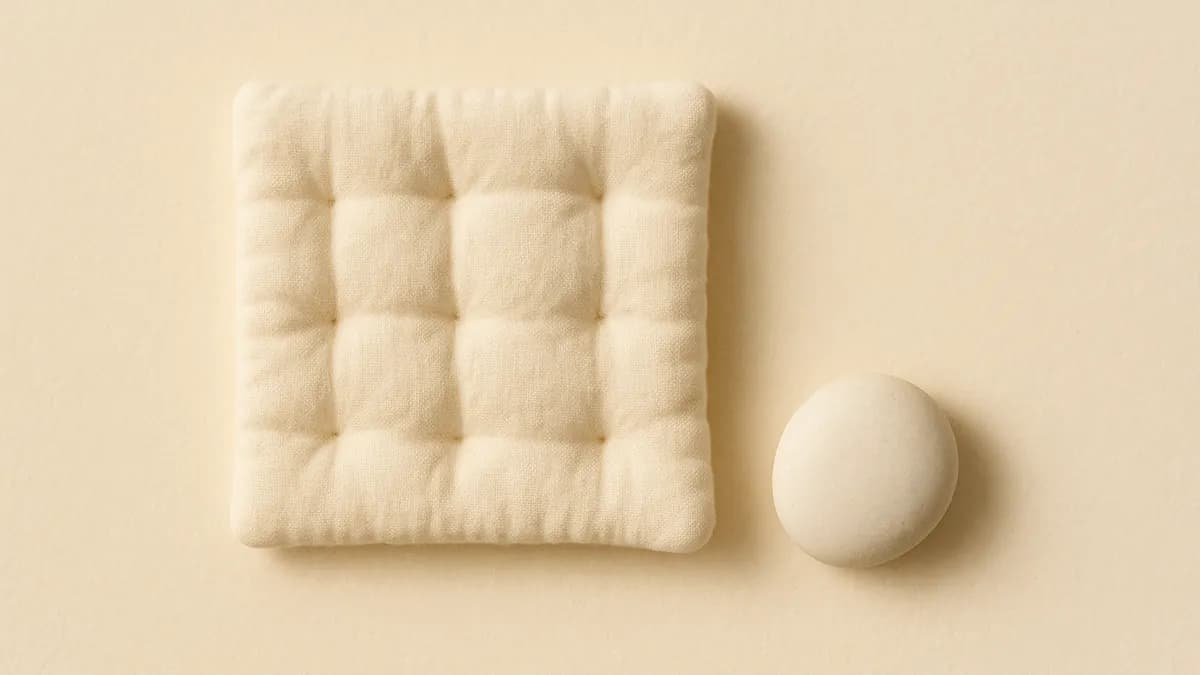
A square of quilted cream fabric with dimpled tufting beside a smooth white pebble
Illustrative image

01 · The short version

Short answer: you have cellulite because of how the tissue under your skin is built, not because you did something wrong. It shows up in 80 to 90% of women after puberty, at every size. Fat pushes up between tough bands that tie the skin down, and the skin dimples where the bands pull.

That's why cellulite is so common on thighs, buttocks and the stomach, and why it can show up on fit, slim people too.

02 · The bands under your skin

Below the skin sits a layer of fat split into pockets by thin, stiff bands of connective tissue called septae. The bands anchor the skin to deeper tissue. When fat pockets bulge upward and the bands stay tight, you get the mattress or cottage cheese look.

A 2020 review of cellulite treatment trials concluded that these bands, more than the fat itself, are the main driver. Treatments that release the bands give the most lasting smoothing.

03 · Why women get it far more than men

In women the bands tend to run more straight up and down, so fat pushes up between them easily. In men they run more in a criss-cross, which holds things flatter. An MRI study found that women with cellulite had deeper fat indentations into the skin and a higher share of bands running perpendicular to the surface, though the real network is more tangled than the textbook picture.

A 2019 study of tissue from body donors found men had more fat pockets and stronger bands, while the force needed to break the bands was much lower in women. Female sex, older age and higher body weight all raised the risk.

04 · The other things that make it worse

  • Hormones. Cellulite almost always appears after puberty, and estrogen is thought to play a role in how fat and connective tissue behave.
  • Genes. A 2010 study linked common variants in two genes (ACE and HIF1A) to a higher chance of cellulite. If your mother has it, you're more likely to.
  • Age. Skin gets thinner and looser over time, so dimples show more.
  • Weight change. Gaining fat makes the pockets bulge more. Losing weight helps many people but not all; in one study some women's cellulite got worse as skin got looser.
  • Sitting a lot and not moving much. Muscle under the skin helps the surface look smoother, and inactivity loses it.

05 · Is cellulite a sign something is wrong?

No. Cellulite is a normal feature of most adult women's bodies. It isn't a toxin build-up, a circulation disease or a sign of being unhealthy. Most of what is sold as a cure leans on that worry.

Cellulite is also a different thing from cellulitis, which is a skin infection that makes an area red, hot, swollen and painful. That needs a doctor quickly.

06 · What you can do about how it looks

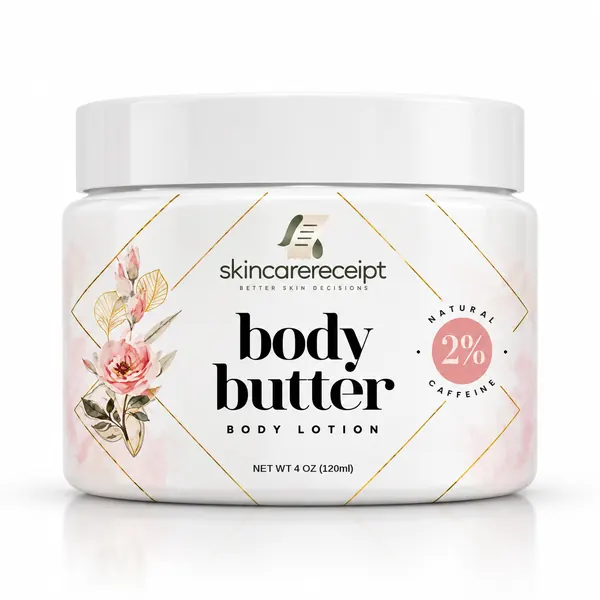
You can't change the bands with a cream, but you can make the surface look smoother. Strength training builds muscle under the skin. A caffeine body cream like our skincarereceipt Body Butter, massaged in twice daily, visibly reduces the appearance of cellulite with steady use, the same kind of caffeine cream that has beaten placebo in double-blind trials. It gives a smoothing effect while you keep using it. For bigger changes, in-office treatments target the bands directly.

07 · The science

Cellulite sits at the junction between the skin and the fat below it. Doctors describe it as a balance between how much fat pushes outward and how well the skin and bands hold it in.

Anything that adds outward pressure (more fat) or weakens containment (thinner skin, weaker bands) makes the dimpling more visible. That's why weight, age and hormones all matter at once.

08 · What might help

  • Strength training for firmer-looking muscle under the skin.limited evidence
  • Weight loss when there's significant fat to lose.limited evidence
  • Caffeine or retinol body creams, which have beaten placebo for the look of cellulite.limited evidence
  • In-office treatments that release the bands, such as subcision.limited evidence

09 · Insufficient evidence

  • Detox diets, teas and supplements for cellulite.
  • The idea that cellulite is trapped toxins or poor circulation.

The Receipt

  1. 01Cellulite is mostly structure: bands pulling down while fat pushes up.
  2. 02It's normal, and thin people get it too.
  3. 03You can soften the look. You can't scrub, drink or detox it away.

Education, not a diagnosis. If something changes quickly, hurts, bleeds, or worries you, see a dermatologist.

Questions people ask

Why do I have cellulite if I'm skinny?
Cellulite depends mostly on how the bands under your skin are arranged, plus genes and hormones. Weight adds to it, but slim and fit women commonly have it too.
What causes cellulite on thighs?
Thighs and buttocks are where women naturally store more fat, and the bands there tend to run vertically. Fat pushes up between them, so dimpling shows there first.
Can men get cellulite?
Yes, but it's much less common. Men's connective tissue runs in a criss-cross pattern that holds fat flatter, and their skin is thicker.
Is cellulite the same as cellulitis?
No. Cellulitis is a bacterial skin infection with redness, heat, swelling and pain. It needs prompt medical care. Cellulite is a harmless change in how skin looks.
Sources (8)
  1. Luebberding S, Krueger N, Sadick NS. Cellulite: an evidence-based review. Am J Clin Dermatol. 2015.
  2. Bass LS, Kaminer MS. Insights into the pathophysiology of cellulite: a review. Dermatol Surg. 2020.
  3. Querleux B, et al. Anatomy and physiology of subcutaneous adipose tissue by in vivo MRI and spectroscopy: relationships with sex and presence of cellulite. Skin Res Technol. 2002.
  4. Rudolph C, et al. Structural gender dimorphism and the biomechanics of the gluteal subcutaneous tissue: implications for the pathophysiology of cellulite. Plast Reconstr Surg. 2019.
  5. Emanuele E, et al. A multilocus candidate approach identifies ACE and HIF1A as susceptibility genes for cellulite. J Eur Acad Dermatol Venereol. 2010.
  6. Smalls LK, et al. Effect of weight loss on cellulite: gynoid lypodystrophy. Plast Reconstr Surg. 2006.
  7. Rossi AB, Vergnanini AL. Cellulite: a review. J Eur Acad Dermatol Venereol. 2000.
  8. Cleveland Clinic. Cellulite: what it is, causes, location and treatment.

Your receipt, next

See what your skin is actually asking for.

Scan your skin for free and get a plain-English receipt with the evidence attached. No account needed.

Trend Receipts, by email

Occasional notes, no weekly blast. See our privacy page.