Skip to content

Skin Files · Body

What is cellulite? A plain-English explainer

What is cellulite? It's the dimpled, orange-peel look of skin where fat pushes up between bands that tie skin down. Here's what it is, how doctors grade it, and the words you'll see on product labels.

By , skincarereceipt content team · Published

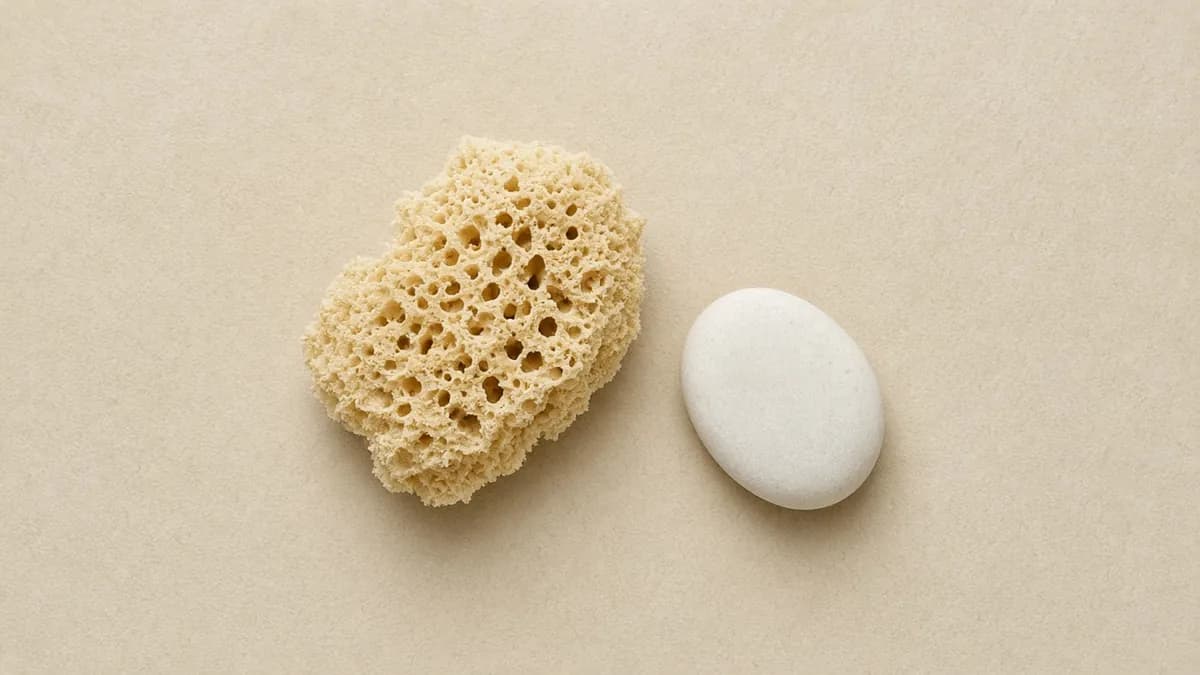
A piece of natural sponge with small round pockets beside a smooth white pebble
Illustrative image

01 · The short version

Short answer: cellulite is the dimpled or orange-peel look skin gets when fat underneath pushes up between bands of connective tissue that hold the skin in place. It's harmless and very common, showing up in 80 to 90% of women after puberty.

You'll hear it called orange-peel skin, cottage cheese skin or, in medical papers, gynoid lipodystrophy and edematous fibrosclerotic panniculopathy. They all mean the same thing.

02 · What it looks like

  • Orange-peel texture: small pits that show when you pinch the skin.
  • Mattress look: larger dimples and bulges that are visible when standing.
  • It's usually on the thighs, buttocks, hips and stomach, and sometimes the upper arms.
  • It looks worse under overhead light and when you tense or pinch the area, and better when you lie down.

03 · How doctors grade it

Older scales split cellulite into grades: grade 1 shows only when you pinch, grade 2 shows when standing but not lying down, and grade 3 shows both standing and lying. Newer photo scales score dimple depth, number and pattern. Clinical trials use these scales, which is how studies report results like a drop in cellulite score.

04 · What it isn't

  • It isn't the same as fat. Slim people have it too. See cellulite vs fat.
  • It isn't toxins, a circulation disease or a sign of poor health.
  • It isn't cellulitis, which is a skin infection. See cellulite vs cellulitis.
  • It isn't loose skin or stretch marks, though they often show up in the same places.

05 · Words you'll see on cellulite products

  • Caffeine: the most-studied cellulite cream active, with double-blind trial support.
  • Retinol: may improve skin firmness after about six months.
  • Lipolysis: fat release from fat cells, which caffeine triggers in lab studies.
  • Firming and smoothing: cosmetic words for how skin looks and feels.
  • Slimming, detox and fat-burning: marketing words. A cream changes how skin looks, not how much fat you have.

06 · The science

Under the skin sits a layer of fat divided into pockets by thin, stiff bands called septae. In women these bands tend to run more vertically and are weaker, so fat bulges up between them while the bands tug the skin down. Hormones, genes, age and weight all affect how visible this becomes.

07 · What might help

  • Caffeine creams for the look of cellulite.Clinically studied
  • Strength training for a firmer base.limited evidence
  • Clinic treatments that release the bands.limited evidence

08 · Insufficient evidence

  • Claims that cellulite is caused by toxins.
  • Products promising to dissolve cellulite.

The Receipt

  1. 01Cellulite is fat pushing up between bands that hold skin down.
  2. 02It's harmless and found in most adult women.
  3. 03Caffeine creams have the best trial support for improving the look.

Education, not a diagnosis. If something changes quickly, hurts, bleeds, or worries you, see a dermatologist.

Questions people ask

What is cellulite made of?
It's normal fat and connective tissue. Fat pockets push up between stiff bands that anchor the skin, so the surface dimples.
Is cellulite bad for you?
No. It's a normal, harmless feature of most adult women's skin, not a disease.
What is the medical name for cellulite?
Doctors call it gynoid lipodystrophy or edematous fibrosclerotic panniculopathy. It's also called orange-peel or cottage cheese skin.
Sources (7)
  1. Luebberding S, Krueger N, Sadick NS. Cellulite: an evidence-based review. Am J Clin Dermatol. 2015.
  2. Rossi AB, Vergnanini AL. Cellulite: a review. J Eur Acad Dermatol Venereol. 2000.
  3. Bass LS, Kaminer MS. Insights into the pathophysiology of cellulite: a review. Dermatol Surg. 2020.
  4. Querleux B, et al. Anatomy and physiology of subcutaneous adipose tissue by in vivo MRI and spectroscopy: relationships with sex and presence of cellulite. Skin Res Technol. 2002.
  5. Rudolph C, et al. Structural gender dimorphism and the biomechanics of the gluteal subcutaneous tissue: implications for the pathophysiology of cellulite. Plast Reconstr Surg. 2019.
  6. Cleveland Clinic. Cellulite: what it is, causes, location and treatment.
  7. Ponto T, et al. Clinical effectiveness of a novel caffeine nano-cream for cellulite reduction: a randomised double-blind trial. Pharmaceutics. 2026.

Your receipt, next

See what your skin is actually asking for.

Scan your skin for free and get a plain-English receipt with the evidence attached. No account needed.

Trend Receipts, by email

Occasional notes, no weekly blast. See our privacy page.